 Sustainable Saunas
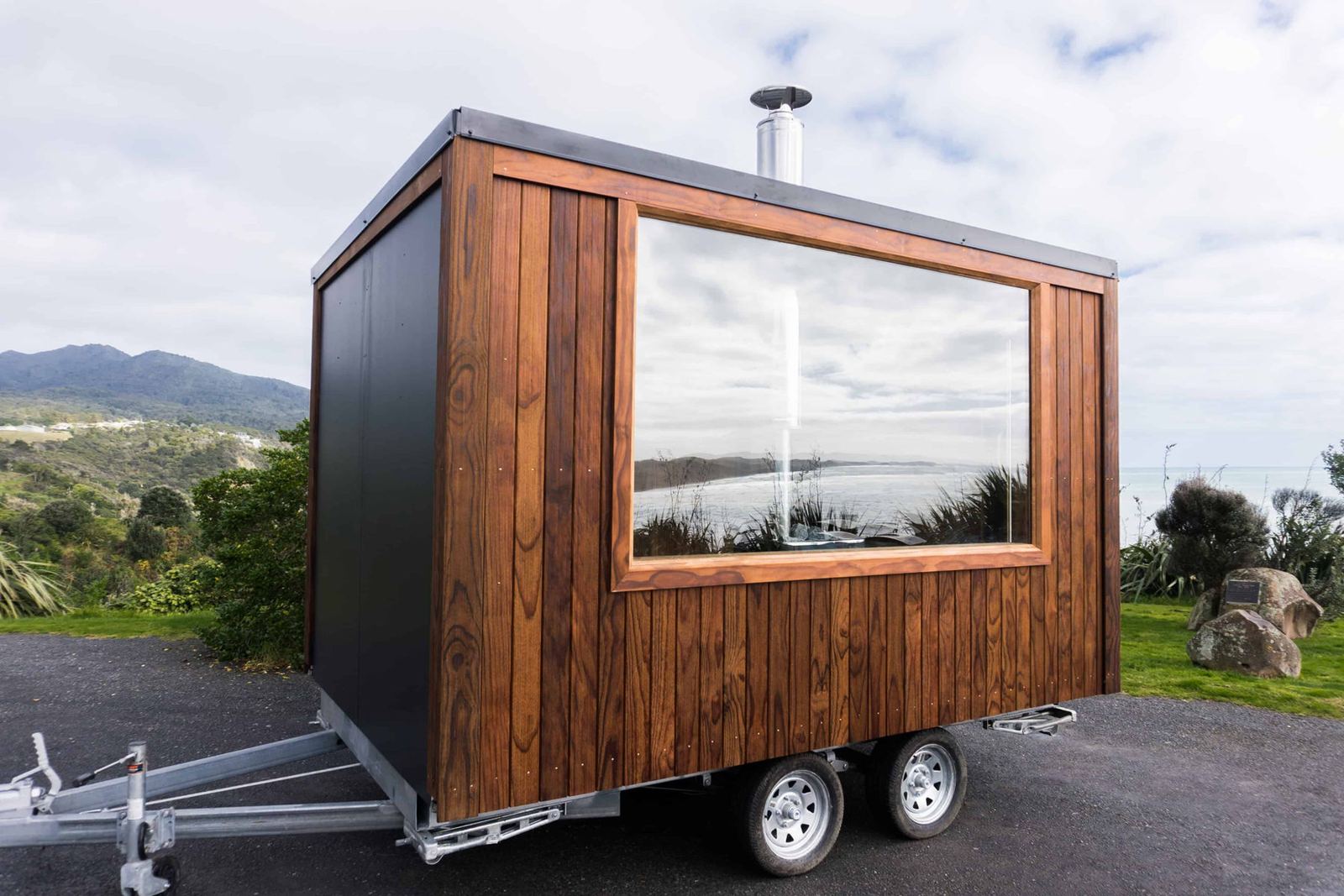
If you haven't noticed a portable sauna pop up in your home town, it won't be long. In the last two years, mobile saunas seem to be the biggest trend. I mean, which seasoned sauna enthusiast wouldn't want to experience a traditional sauna right next to the beach, a lake in the mountains or with a stunning view, and earn an income while you do it? That is the ultimate sauna experience.
Want to Get Paid to Sauna?
If the health benefits of improved cardiovascular health, muscle recovery, improved skin health and stress relief weren't enough, many are turning their heads to those running outdoor sauna businesses. Parked at the beach on a Tuesday morning, sauna goers rinse off in the salty waves before returning to the dry heat of the wood-fired sauna for another 15 minute round, as the facilitator pours cold water mixed with essential oils over the hot stones, creating steam scented with lavender and lemon like a wellness wizard, taking their wellness journey to the next level.
How it Happens
Weekly, I get calls from people all over the country, ready to open their own mobile sauna business. They're finally fed up with the nine to five. Their most enjoyable moment in the week is sitting in their local public swimming pool dry sauna, the small electric heater struggling to maintain the tepid 67 degrees Celsius, discussing in depth with their fellow sauna enthusiasts how the town needs a better sauna. The large glass door opens, wide enough to let in a large bear, to ensure all the built up heat immediately exits the sauna every time someone comes in or out. A young man pours his entire Hydro Flask water bottle on the hot stones and the sauna is out of order for another three months. And like that, their heat therapy wellness routine is out the window along with their other New Year's resolutions.
Finally, they've had enough. With a sense of valour they exclaim to the local sauna goers 'I will open my own portable sauna that will be better than any you've ever seen before!' And with that they trump off.
Already feeling like a saviour, they begin their research.
Where to Run Your Sauna
Public Land
Each council has different rules and you will need to navigate through the elusive wormholes of the council multiverse to find out what they are.
If you've seen a food truck or another mobile business running in your dream car park, you're in luck. Either with or without a permit, it is possible. If you haven't, on the other hand, don't roll up until you've found out. Councils have already threatened naive portable sauna owners with $20,000+ fines.
With a disciplined mind, you can even start grooving to the early 2000's pop music you listen to while you wait on hold for your local council. They will tell you where you can operate; just make sure you explain to them that a sauna is not the same as a spa pool, somehow a common misunderstanding.
Private Land
With or without the option to operate on public land, I recommend to all our customers to operate from a private location. The main reason is that you can leave the sauna there semi-permanently. This not only removes the set up and pack down time every session when you pull up to your favourite spot, but it lets you build consistency for your customers and lets you run many more sessions, and this is where you will make your profit.
Don't Operate as a 'Pop-Up' Sauna
Going to the sauna isn't a one off occasion. People want to integrate it into their weekly routine. When I opened the Redwood Sauna in 2022, I was amazed. Every week, new people would come to the sauna and afterwards say 'I loved it, I am going to start coming weekly', and they would! Within a couple of months we had over 100 bookings per week and now we have up to 200. This is possible because we run from private land and run consistent sessions, allowing the sauna to become a part of so many people's weekly routine in Raglan.
The same goes for festivals. If you have a good set up, it won't be worth the hassle of going to festivals because you will have so many regular customers.
Facilities
Even on private land, I didn't say it would be easy to find a location. Finding a location is the most difficult part of the process. Once you have a location, the rest of the process can flow smoothly.
Why is it so difficult? Because you need access to the combination of the following:
- 1. ParkingFor up to 15 people
- 2. BathroomsClose to the sauna
- 3. WaterFor drinking and showers
- 4. Changing roomOptional
- 5. ElectricityIf you want an ice bath
Somehow, this combination is like adding filters on Airbnb for the one date you can go on holiday and the results showing up empty. But it can be found!
Booking System and Website
Another common barrier that keeps many up at night is the daunting task of creating a website and booking system. We feel ashamed to admit we don't even really understand what the word 'coding' means, let alone how to create a website.
No-Code Website Builders
Luckily, we don't need to. Website builders like Wix, Squarespace and Wordpress allow you to easily create a website from a template, and you might even enjoy it a little, while only paying $300-$500 per year for the subscription.
Booking System
We have found that the cheapest, most affordable booking system is the one that comes with Wix. It will handle your customer demand up to around 100 bookings per week. After this you might have to start thinking about specialised booking platforms such as Momence and Mindbody, which cost around $300/month.
What Type of Sauna to Run
There are three main types of sauna: traditional Finnish sauna, infrared sauna and steam sauna (wet sauna).
Traditional sauna
Finnish saunas or wood-burning saunas use hot rocks and a higher temperature to create a dry heat experience. With low humidity, these saunas allow for deep sweating and ultimate relaxation, where the hot stones allow essential oils mixed with water to be poured over creating waves of scented steam.
Infrared Sauna
Infrared saunas use infrared light to heat the body directly, while traditional saunas heat the air. Along with far-infrared saunas, these offer a milder experience with lower temperatures, which some find more comfortable.
Steam Sauna
Steam saunas, also known as wet saunas, differ from traditional saunas by utilising steam instead of dry heat. The high humidity can have health benefits for respiratory health, skin hydration, and overall relaxation. A steam sauna session offers a distinct experience tailored to those who prefer moisture-rich environments. I am yet to see a portable steam sauna, but that would be cool.
Sauna Tent (bonus!)
For some reason, when trying to find portable saunas on Google, the most widespread offering is the sauna tent. We will not go into these in depth here; needless to say, the sauna tent does not offer the same quality of sauna experience as a fully framed sauna.
Heating: Wood-fired
Most of our portable saunas are wood-fired, which means you don't need to rely on electricity access and can run them from anywhere.
Heat Up Time
The 15 person mobile sauna takes 90 minutes to heat up to 100 degrees Celsius, refilling the fireplace every 20 minutes.
What Firewood to Use?
'Thin and crispy' is what I tell my firewood supplier every time I order. At the Redwood Sauna in Raglan, we use Kiln Dried Douglas Fir. It may sound over the top but I promise you it is not. Firstly, to get the sauna temperature pumping, you're going to want to use soft woods, like Pine or Douglas Fir. We want it to burn hot and fast. We are looking for different properties than the 'Hot Mix' that is usually advertised for your home fireplace, which contains a lot of slow burning, hard woods like Gum, Oak and Manuka. You can get away with diluting in some harder woods when the sauna is at temperature, but not before.
We want thin so that it burns fast. Large logs will take a long time to catch and will release their heat slowly. Remember, hot and fast is what we want. Find a supplier who can give you the right sized pieces; you don't want to get out your axe every time a load is delivered. The novelty wears off.
And finally, we want dry wood. It shouldn't need mentioning but too many times have I been delivered a load of damp firewood. If you have the option to buy kiln-dried firewood, it is worth the extra cost, and have a large storage area where you can keep 2-3 cubic meters of firewood dry.
How Much Wood Does It Burn and How Much Does It Cost?
There are many factors that determine this. On average, one cubic meter lasts about 10 one-hour sauna sessions. So if you're paying $200/cubic meter, that's $20 per session, which is a pretty low running cost.
If you're running 3-4 days per week and a few sessions each day, you can assume you'll be burning through one cubic meter per week. That's a lot of dry, well-sized wood for your local firewood supplier to keep up with. I recommend you find a commercial supplier who can give you a GST tax invoice so you can claim your firewood as an expense.
How Long Will The Sauna Take to Pay Off?
It depends on which sauna you get, how many sessions you run per week and how much you charge. Let's do some simple math assuming you're running it yourself (10 people per session, 3 sessions per day, 3 days per week = 90 bookings per week; we get over 150 bookings per week in Raglan, population 3,000).
| Per month | AUD |
|---|---|
| Revenue: 90 bookings per week at an average of $20 ($1,800/week) | $7,200 |
| Firewood | −$700 |
| Rent (if private land) | −$1,000 |
| Website | −$40 |
| Income | $5,460 |
| After tax (28%) | ≈ $3,930 |
If you bought a 15 person sauna for A$78,000 it would take you about 20 months to pay it off, well under two years. That's a pretty good return on investment.
Conclusion
And with that, you're ready to create your own sauna business! Feel free to reach out if you have any questions about location, saunas, or starting your own mobile sauna business!
6, 8, 12 and 15 person wood-fired saunas on registered trailers.