 Sustainable Saunas
Materials
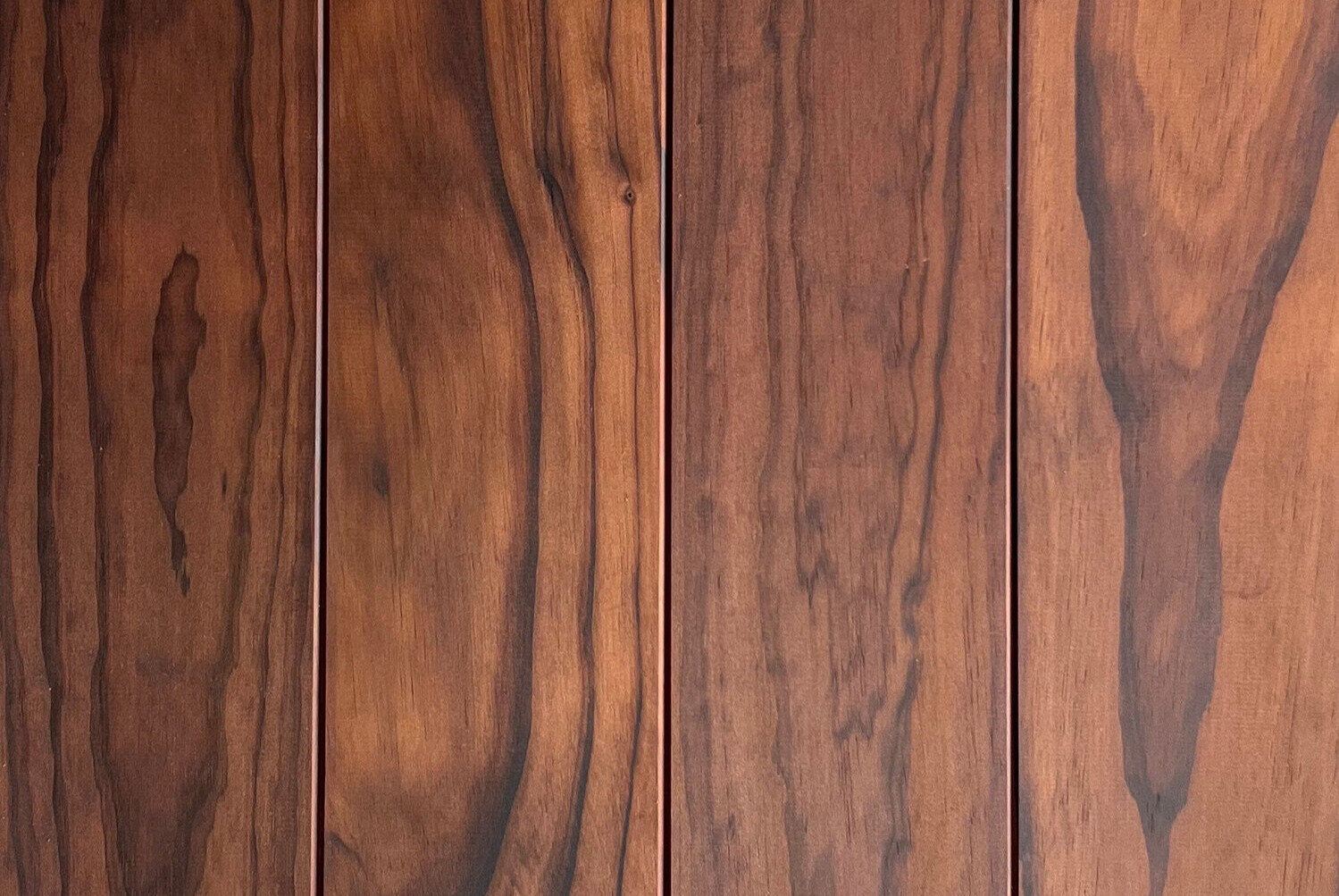
Thermally Modified Timber
We use NZ Radiata Pine that has been sourced from forests that are Forest Stewardship Council® (FSC®) certified. During a local thermal modification process, the timber transforms into a durable and beautifully scented product, adding to the high quality feel of our saunas. The thermal modification alone brings the hazard rating of the timber up to H3.2, meaning we can use it as our cladding without resorting to chemical treatment.
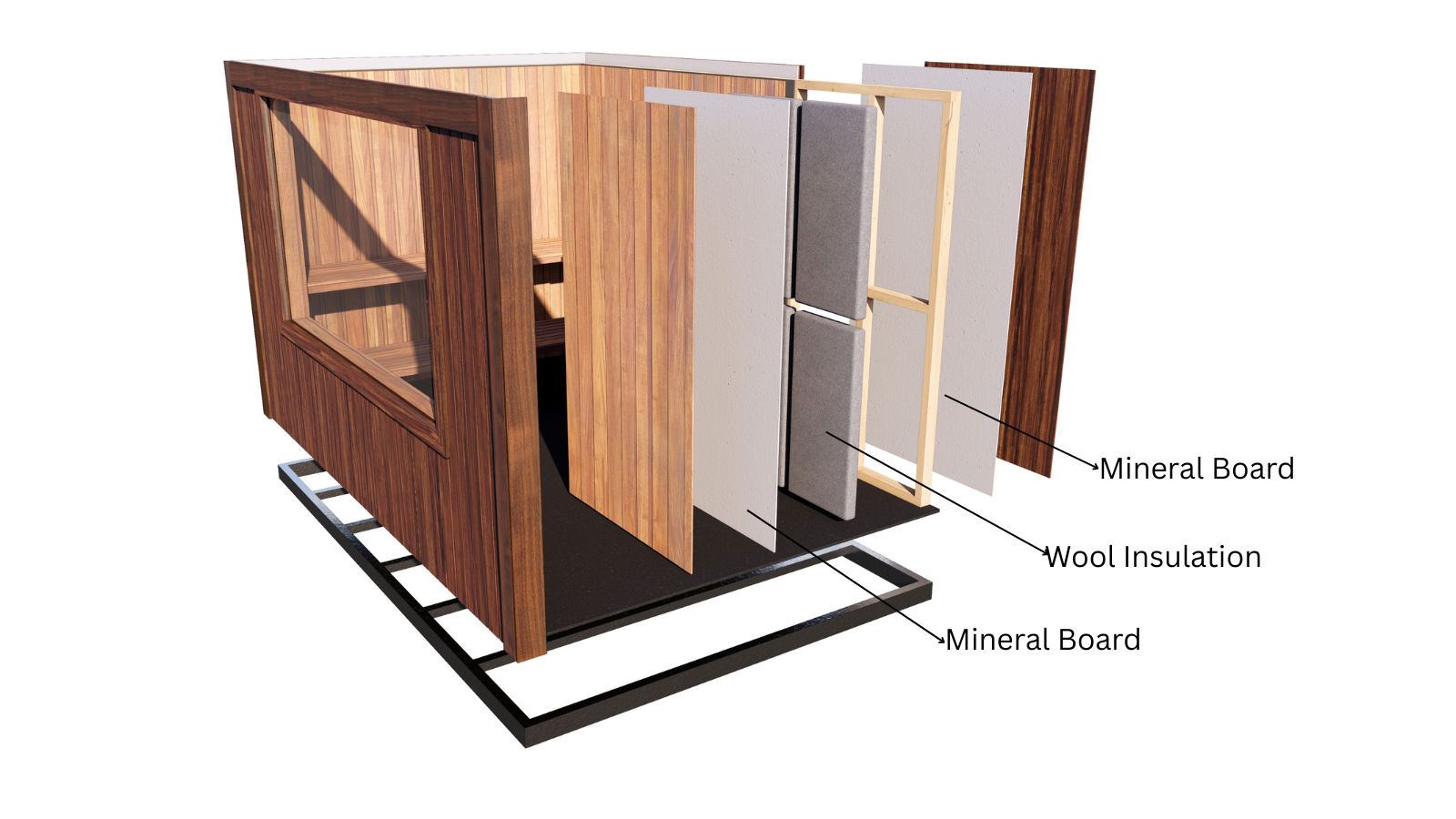
Wool Insulation
We use New Zealand sheep's wool to insulate our saunas. This keeps our saunas warm and dry due to the natural properties of wool. As moisture passes through our breathable walls, it undergoes an exothermic reaction with the wool, releasing heat in the process.
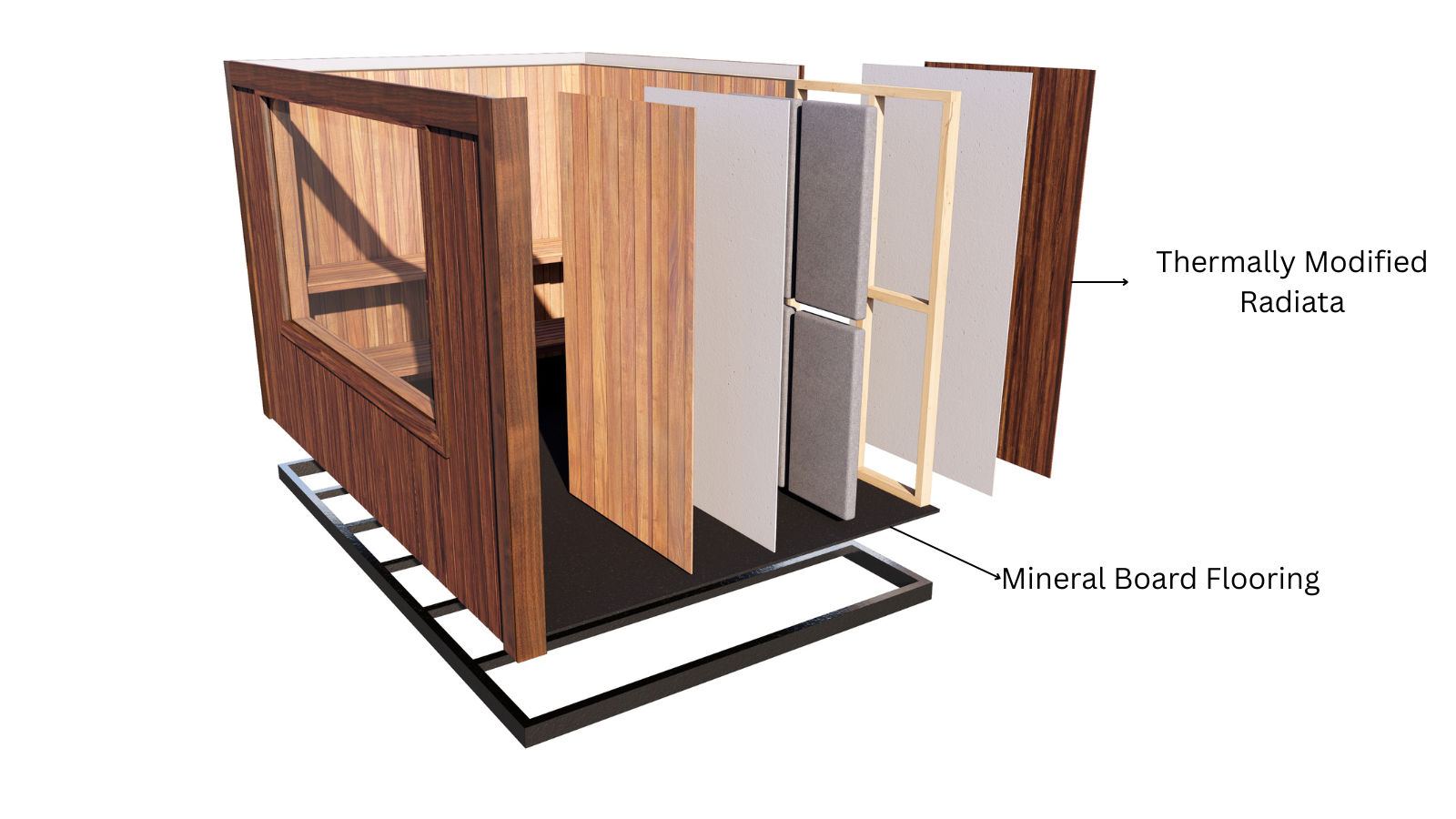
Magnesium Oxide Mineral Board
Replacing plastic-based barriers, we use a mineral board made from magnesium oxide. This is sustainably sourced from surface mines and creates a strong, durable and healthy space for you to relax in.
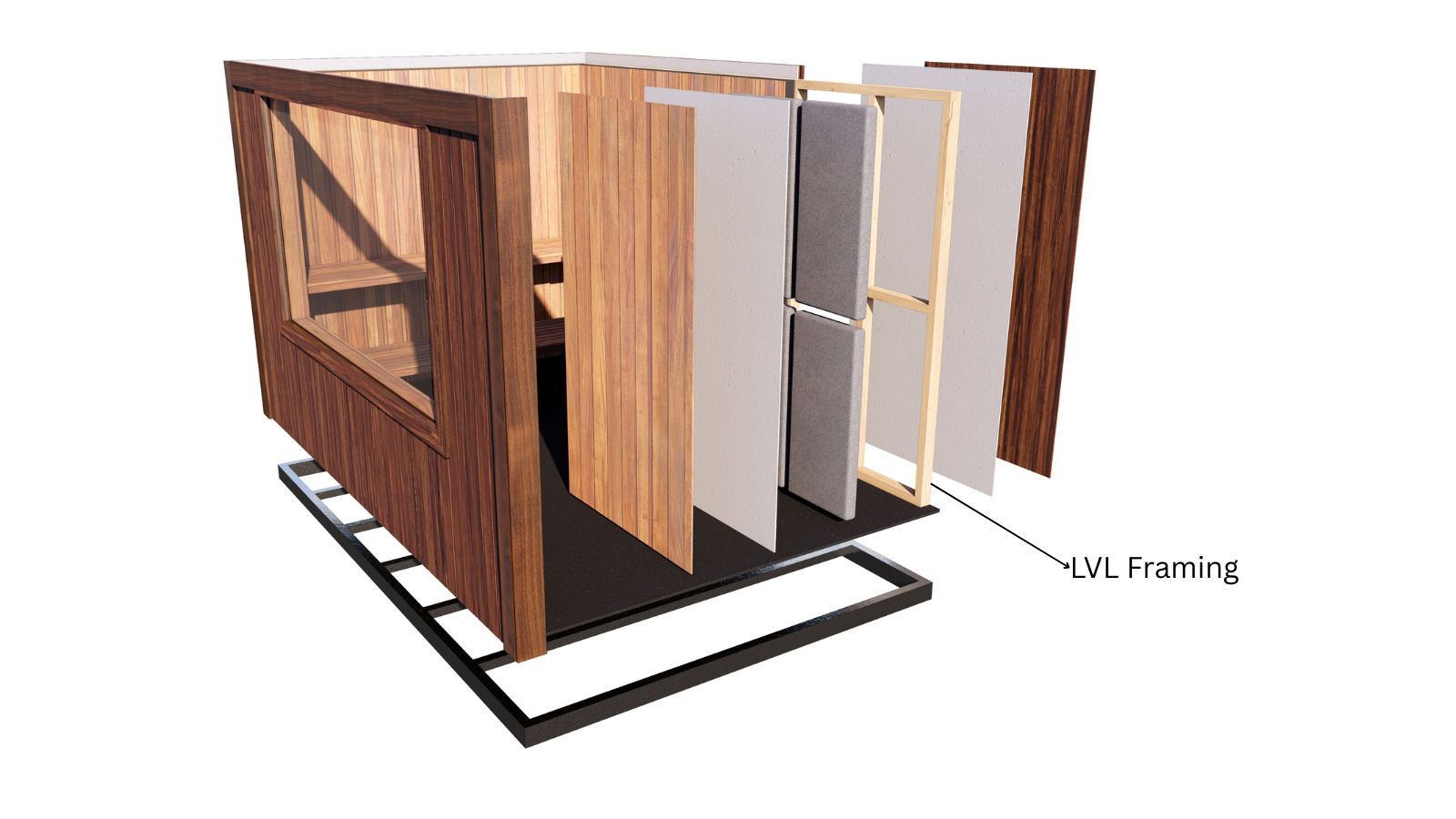
LVL Framing
We use FSC-certified NelsonPine Laminated Veneer Lumber (LVL) for our sauna framing. LVL is an engineered timber made by bonding layers of structurally graded radiata pine veneers in parallel. It’s stronger, more stable, and more consistent than standard sawn timber. Treated to H1.2 for durability, our LVL framing ensures your sauna is built like a home: solid, straight, and made to last.
Foreverbreathe Specification
Our saunas are built with a careful selection of high performing materials that capture and store carbon in their raw state, avoid plastics, polystyrene and harmful chemicals, while considering long-term impacts on environmental and human health.
The Foreverbreathe Specification was developed for healthy and sustainable homes, focussing on improving air quality, energy efficiency and passive ventilation. At Sustainable Saunas, we realise that these values become even more important in the heat of a sauna, especially since we like our saunas hot! VOCs in plastics and harmful chemicals begin to leach out into the air at an accelerated rate with increasing temperatures, and optimisation of energy efficiency becomes more important than ever. Moreover, the steam we create by pouring water on the rocks requires unrivalled ventilation to remove moisture to enable a long lifetime of the sauna.
All of these priorities are addressed by the Foreverbreathe Specification. Moisture inside the sauna diffuses into the walls, where absorption by the wool insulation undergoes an exothermic reaction, releasing heat and drying out in the process. Our saunas capture this heat and bring you a sauna experience like no other.
Advancing the building industry away from toxic materials
The buildings in which we live, work, and play are major contributors to human and environmental health. So, we need to build well. But sadly, this isn’t the case. The negative impacts are easy to see in declining air quality, illness, pollution, and environmental devastation.
Products that contain or release harmful chemicals need to be replaced, but instead they make their way into the structure of our homes. These products impact outdoor and indoor air quality, and too easily end up in landfill, waterways, and oceans, through waste created during product manufacturing, construction, and natural disaster.
We believe the building industry, and businesses that construct and supply building materials, have a responsibility to do better. They need to be sustainable and offer consumers better, healthier options. If they don’t, poor health and environmental outcomes will plague generations to come.
The Foreverbreathe Specification demonstrates a sustainable future is possible and is leading the world in the perfection of air quality within built environments. This specification delivers a high-performance, energy-efficient home with exceptional air quality, with the confidence that the materials used ensure healthy outcomes for you and the environment.
The traditional building industry has proven to have negative impacts on human and environmental health. Sure, some of these materials provide short-term benefits, but long-term the negative impacts are clear to see, as human and environmental health suffers. Through production, inefficient building practices, and natural disaster, unsustainable volumes of construction waste end up in landfill or the environment, where it becomes a problem for future generations.
The pollution and waste that building materials create throughout their product lifecycle must be prioritised, to ensure a healthy, sustainable future.
Plastics & Toxins poison our waterways
Climate change is bringing more frequent and devastating weather events, such as floods, that destroy homes and communities and distribute waste into waterways, where it is spread across the planet’s land and oceans.
Toxic building waste end up in landfills
Unsustainable volumes of hazardous construction waste end up in landfill, where over time they break down, releasing toxins into soil, waterways, and the air we breathe.
Declining air quality
The use of products that contain hazardous material and plastics has a direct effect on air quality. The toxins they contain are released into the air we breathe during manufacture, over time with use, or on disposal.
Hidden in plain sight
Large volumes of plastics and hazardous toxins are used to build our homes, schools, and workplaces, often hidden in plain sight in carpet, insulation, paint, joinery, plastic frame wrap, and membranes.
Start your sauna
Every sauna is built to order in Melbourne. Send us a few details and we'll come back to you by email with options, pricing and freight to your area.